As temperatures drop and heating systems are switched back on, the risk of carbon monoxide (CO) poisoning is once again a major concern.
Colourless and odourless, CO can be produced during the incomplete combustion of gas, fuel oil, coal, wood or pellets. A poorly maintained heating appliance or water heater, inadequate flue gas extraction or insufficient ventilation can lead to a dangerous build-up of CO in the home.
A reliable detector can make all the difference
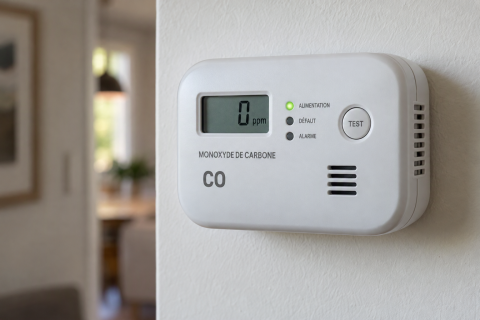
A CO detector alerts occupants when a dangerous concentration is detected. However, not all devices available on the market necessarily offer the same guarantees of performance.
The CE marking, on its own, does not attest to the CO detection performance. A voluntary certification such as BOSEC provides additional guarantees regarding the quality, reliability and performance of the detector.
As part of the BOSEC certification process, ANPI carries out tests on carbon monoxide detectors in accordance with the NBN EN 50291-1 standard, under ISO/IEC 17025 accreditation by BELAC. This standard defines the test methods and performance requirements applicable to detectors intended for domestic premises.
Good habits to reduce risks
A CO detector provides additional protection, but it is no substitute for the maintenance and inspection of installations. To minimise risks: The risk also applies to chimneys: a blocked, cracked or poorly maintained flue can disrupt the extraction of combustion gases. You can also find ANPI’s advice on preventing chimney fires and maintaining your chimney system correctly.
- have your heating appliances, water heaters and flues serviced regularly by a professional;
- ensure there is adequate ventilation and never block ventilation grilles;
- follow the installation and operating instructions for your appliances;
- never use a barbecue, brazier or outdoor combustion appliance indoors;
- install the detector in accordance with the manufacturer’s instructions and test it regularly.
Recognising the signs of poisoning
Headaches, nausea, dizziness, unusual tiredness or feeling unwell may be the first signs of CO poisoning. It should be a particular cause for concern if several people in the same room are experiencing the same symptoms, or if these symptoms disappear when they leave the property.
If you suspect poisoning or if the detector goes off:
- immediately ventilate the room if you can do so without putting yourself at risk;
- leave the premises;
- immediately call 112 and report a suspected case of CO poisoning;
- do not use the appliance in question again until it has been checked by a professional.
Find out more
Discover carbon monoxide detectors and the tests carried out by ANPI.
To explore the subject in greater depth, ANPI has also dedicated its Technical Report DTD 193 to domestic carbon monoxide detectors: how they work, applicable standards, installation recommendations and safety measures.
View Technical Report DTD 193.
Any questions?
For further information on BOSEC certification or the tests carried out on carbon monoxide detectors, contact ANPI: certification@anpi.be.